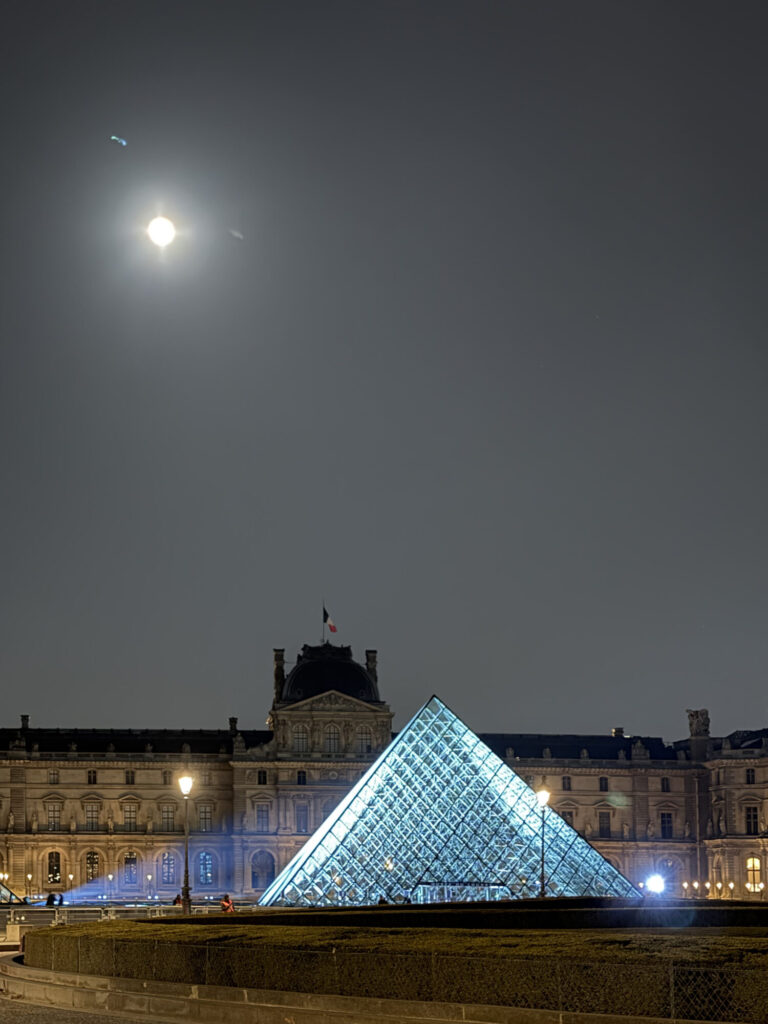
You never know what you’re going to get in Paris in March. It can often feel like an extension of winter – cold and damp, even as the days lengthen. This year’s mood was uneasy, with global conflict as an undercurrent to every conversation. But in sharp contrast to everyone’s internal worries, the sun was bright, the temperatures mild, and the daffodils nodded cheerfully on thick grass beneath greening trees. Even in the midst of so much uncertainty, the city kept reminding us how much beauty there is in the world.
We began this season in Milan, which remains rooted in precision, its collections built around immaculate tailoring, luxurious fabrication, and an enduring respect for the discipline of dress. In the candy-colored showrooms of Santoni, we marveled over the craftsmanship of the hand-detailed leather goods and shoes. At Massimo Alba, the collection radiated an Italian sprezzatura, meticulously designed to be worn without effort.
Paris, by contrast, thrives on friction. Ideas collide here. The city rewards designers who push past the familiar and ask more complicated questions about clothing, identity, and form. Where Milan refines, Paris disrupts. Where Milan polishes, Paris experiments.
Many designers do not feel called upon to make significant commentaries upon the state of the world in every collection, but Rei Kawakubo and Rick Owens move in the opposite direction.
At Comme des Garçons, Rei Kawakubo once again approached clothing as a philosophical problem. The show was staged in a new – at least to us – location; another abandoned factory, this time far from the bustling city center in the 14tharrondissement.
In the first third of the show, models walked the runway entirely in black (“Black is the color for me,” Kawakubo said in her show notes.), but then there were some sashes – just a single ribbon in each look: red, green, blue. The music stopped. Out came six looks entirely in bright pink. In silence. All you could hear were the models’ footsteps. And then, a moment or two after the last pink look vanished, the music returned. Tomaso Albinoni’s melancholy but beautiful “Adagio in G Minor,” played as more all-black looks returned to close out the show.
At Comme des Garçons, it is always difficult to envision how the season’s collection will unfold from the runway looks. This year, there were some direct translations. Everything was presented in black, with a few white options and, of course, some pink.
Comme des Garçons continues to remind us that fashion, at its most compelling, is not merely decoration—it is inquiry.
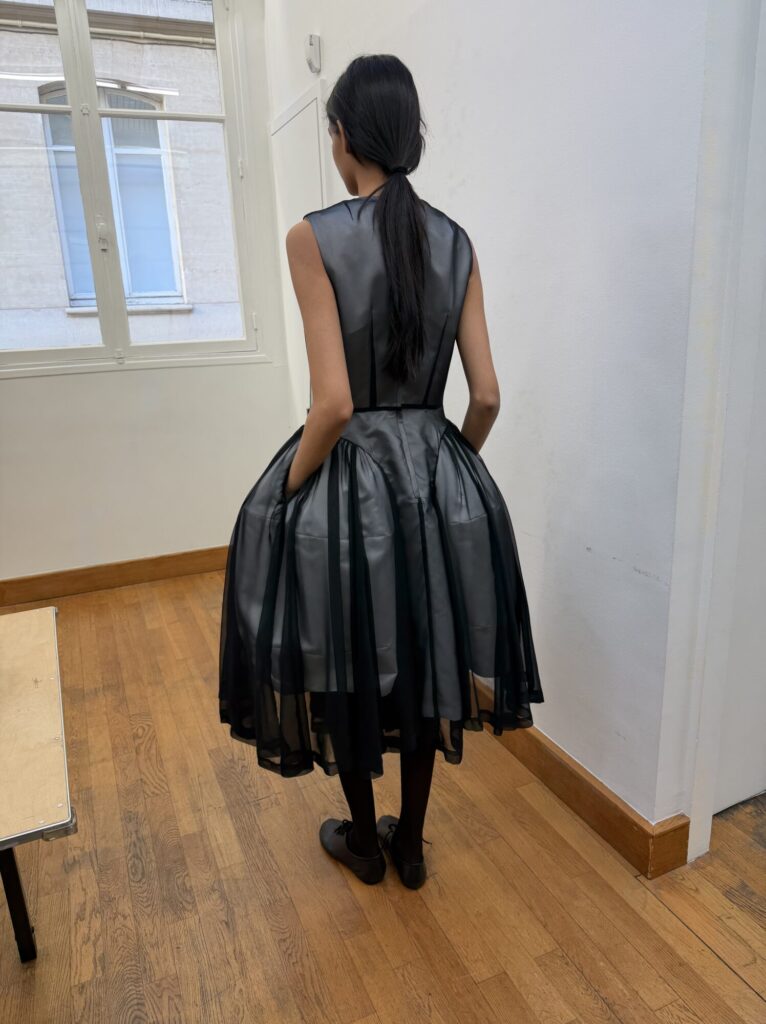
The FW26 women’s collection continued where the men’s collection left off, with Rick Owens’ ongoing investigation of silhouette and proportion – elongated bodies, sculptural shoulders, and sweeping coats that felt both ceremonial and protective. The press release noted that the title of the FW26 collection is “‘Tower,’ as in “Temple of Love, Tower of Light – a prayer for love and hope. (To this he added, “And strength and protection.”)
Owens has noted that one of his primary inspirations for this season’s collection is Marlene Dietrich and the phases of her life and career – from sexual provocateur to her “duty and service during wartime… a very attractive mix of morality and artifice with a strong sense of responsibility and grit.”
The garments in this collection possessed weight and permanence, as though they were designed not for a moment but for a lifetime. What struck us most was the emotional register: strength expressed through restraint. These were powerful clothes.
Other shows we paid particular attention to included:
The irony that the most talked-about shows were new (or new-ish) designers at heritage houses was not lost on us. The balance between history and contemporary cultural relevance has never seemed more present.
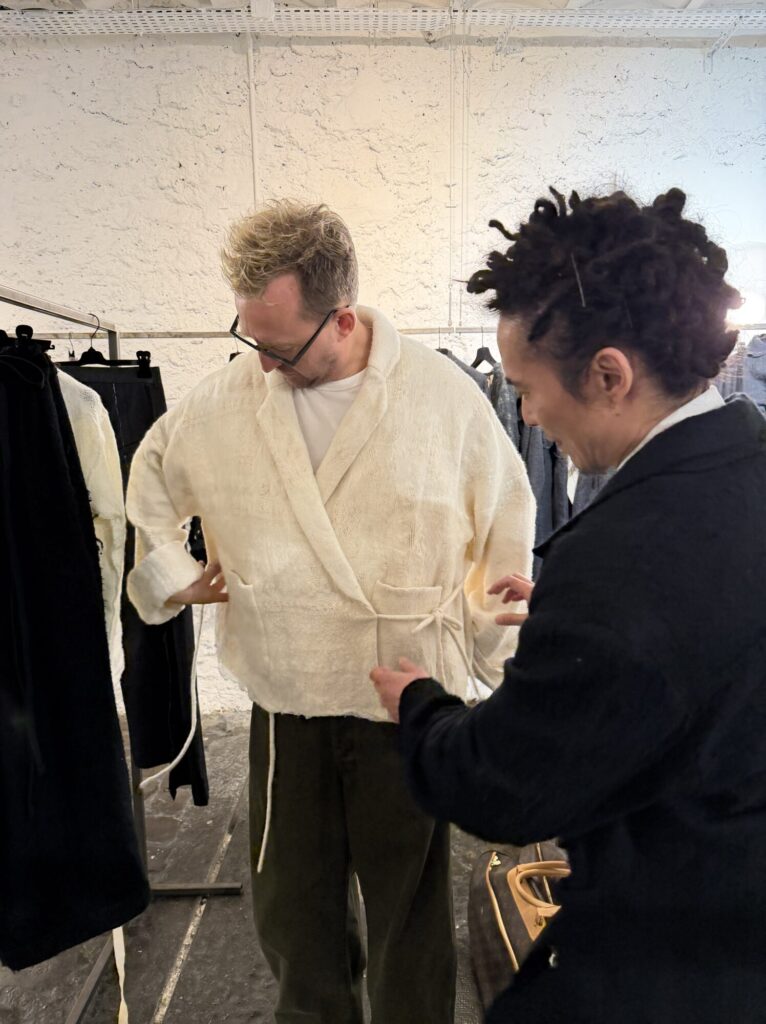
For us, the week reaffirmed something fundamental to how we curate W Department:
the most compelling wardrobes, like all collections, are not assembled quickly – they are built over time through pieces that hold their essence, their ideas, and their integrity.
Fashion Week is always a strange mixture of exhaustion and exhilaration. In all of the chaos of the schedule, we still managed to find time for a few dinners with friends and colleagues where the conversation drifted between art, architecture, music, and – of course – clothes. These conversations and connections are what keep bringing us back.
Fashion Week is not simply about garments; it is about the worlds those garments imagine and inhabit.
Let us know what you think about the season’s collections!
Until next time,
— Paisley & Christopher