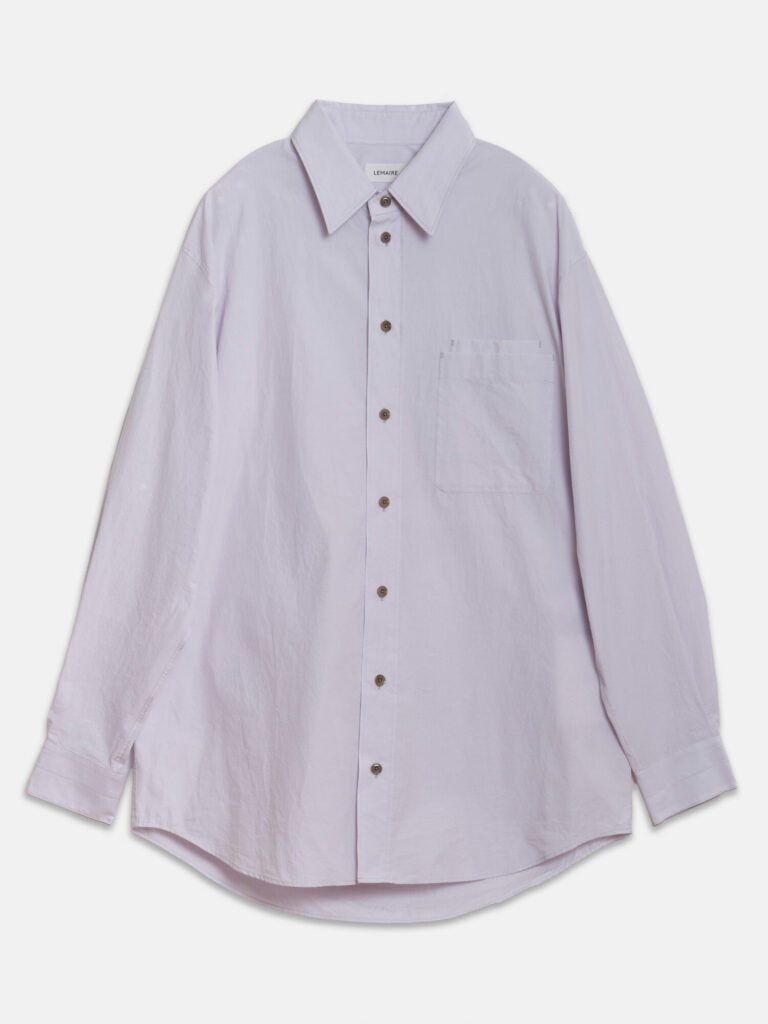
Lemaire is a Paris house, founded by Christophe Lemaire in 1991 and led since 2010 by Lemaire and Sarah-Linh Tran together as co-artistic directors. Lemaire came up through the studios of Thierry Mugler, Yves Saint Laurent, and Christian Lacroix, spent the 2000s as artistic director at Lacoste, and directed women’s ready-to-wear at Hermès from 2010 until 2014, when he left to give the whole of his attention to this house. Tran trained as a literary publisher before she came to clothing, which is a different education from his and is audible in the result. The house is rooted in Paris at 11 Place des Vosges, with stores in East Asia as well as at home.
Its own account of what it does is worth taking literally: clothing and accessories designed for everyday life, built from modular shapes, distinctive materials, and construction details subtle enough that they follow the body’s movement instead of announcing themselves. Cloth is sourced principally from Europe and Japan. The garments are made by partners across Europe and the Mediterranean, working to a shared code of conduct with independent audits, and the origin lines on the pieces we carry run through Portugal, France, Romania, Tunisia, and Morocco, among others. None of that is decorative detail. Consistent makers are what let a garment be repeated season after season without quietly becoming a different garment, which is most of the argument for buying clothes this way at all.
The other thing worth knowing before you read a product page is how Lemaire names things. Boxy, Twisted, Relaxed, and Seamless are cut and concept descriptions applied across a whole collection rather than model names carried from season to season. Two garments sharing one of those words are as likely to be a silk shirt and a wool cardigan as they are to be relatives. The word tells you what idea the garment came from, not what it is made of or what it will do, so read the cloth line rather than the name.
Ready-to-wear is the center of the house, and around it sit shoes, bags, and jewelry drawn in the same vocabulary rather than licensed out of it. In a 2022 interview with the two designers, Tokion put the house’s terms as “Seasonless, Genderless, Effortless.” GQ has said, “If the lion’s share of luxury fashion opts for fantasy, Lemaire proudly makes clothes that stay tethered to reality.” It is hard to put it better in one line.
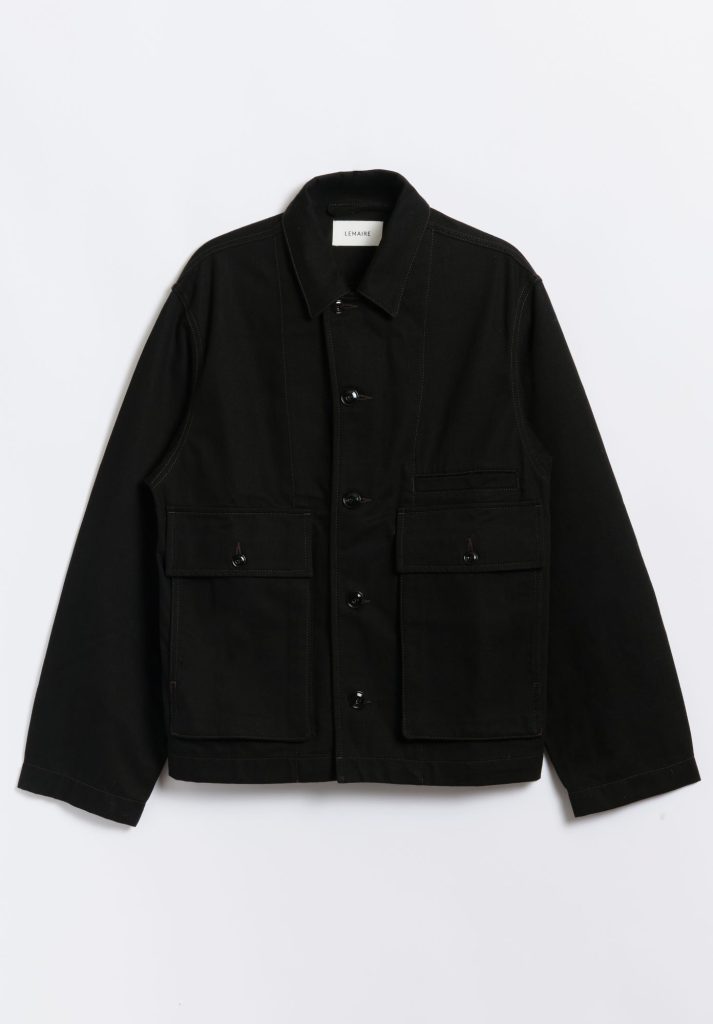
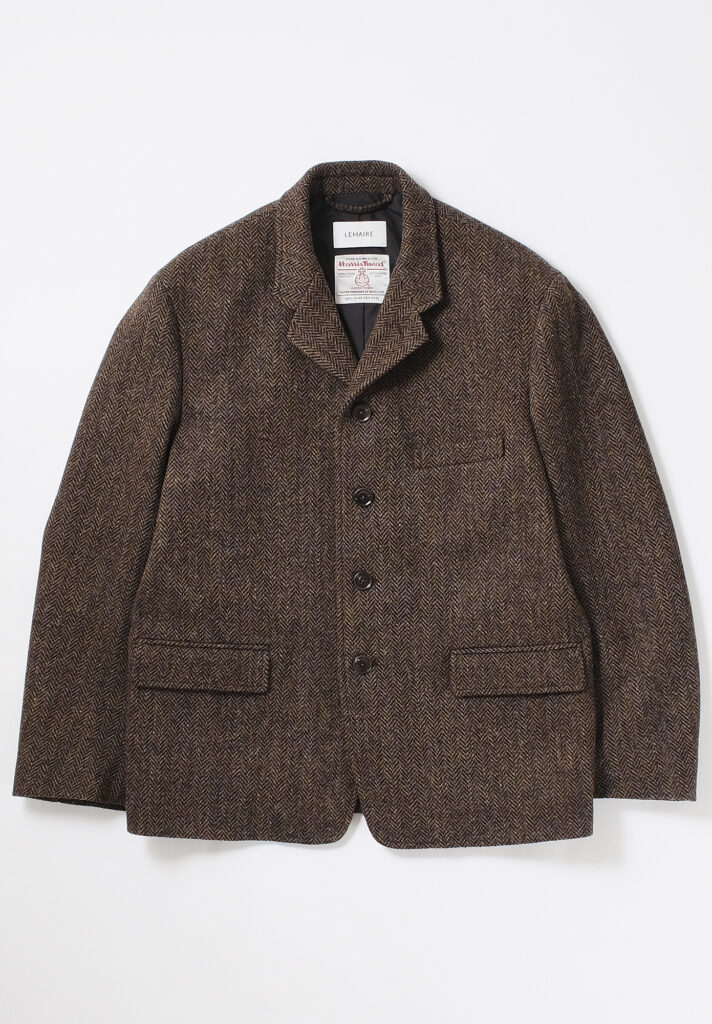
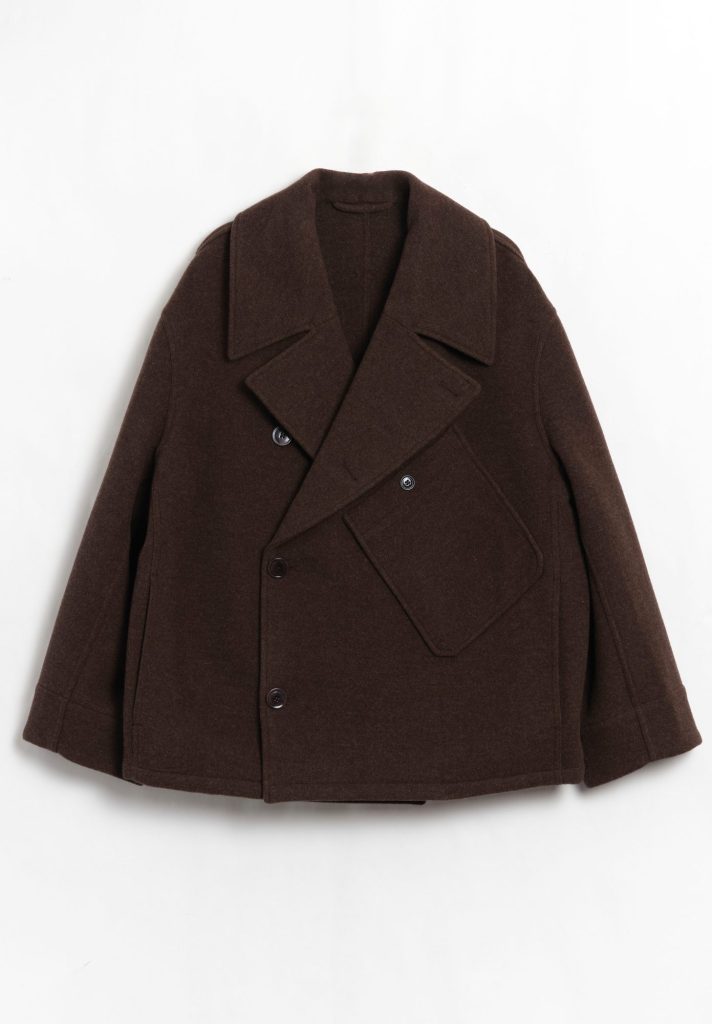
Outerwear and tailoring come first, and they are where the house’s habit of taking a loaded cloth and cutting it as though the associations did not exist is easiest to see. There is a boxy tailored jacket in a genuine Harris Tweed herringbone, black and brown melange, fully lined and square through the body so that the shoulder and the hem do the work a waist would ordinarily do. Alongside it sit a peacoat and a utility jacket in wool with cotton linings, a raglan jacket liner in a half-and-half wool and alpaca, a soft-shouldered jacket in a cashmere blend, and a short puffer blouson. There is also a boxy jacket in plain cotton denim, unlined, which is the same word doing an entirely different job.
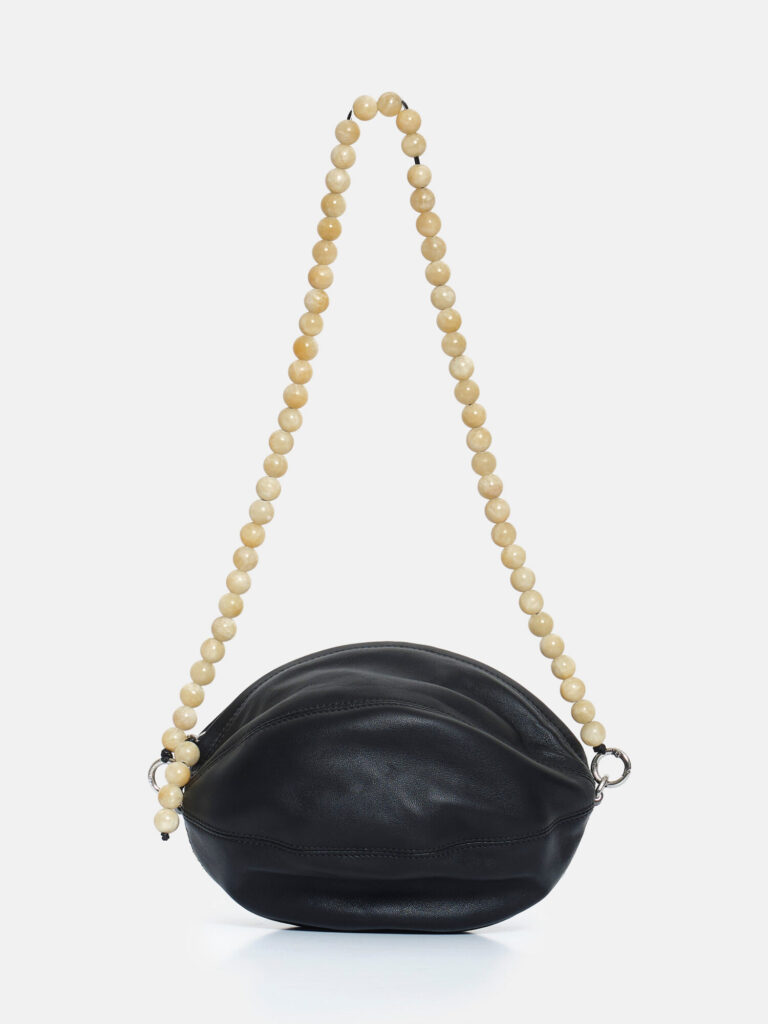
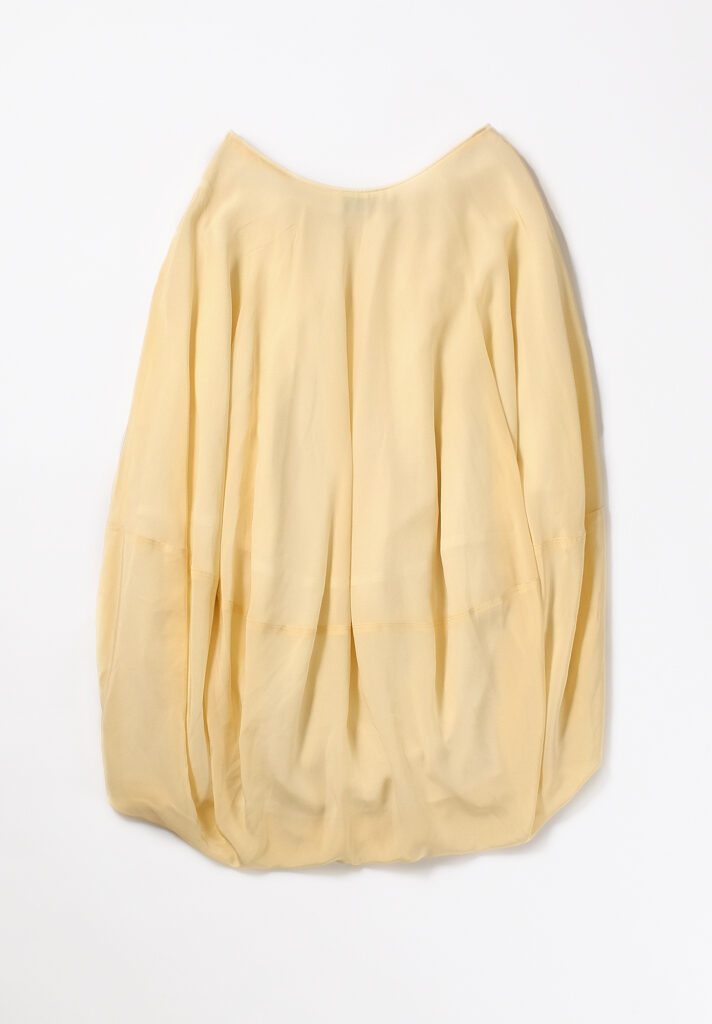
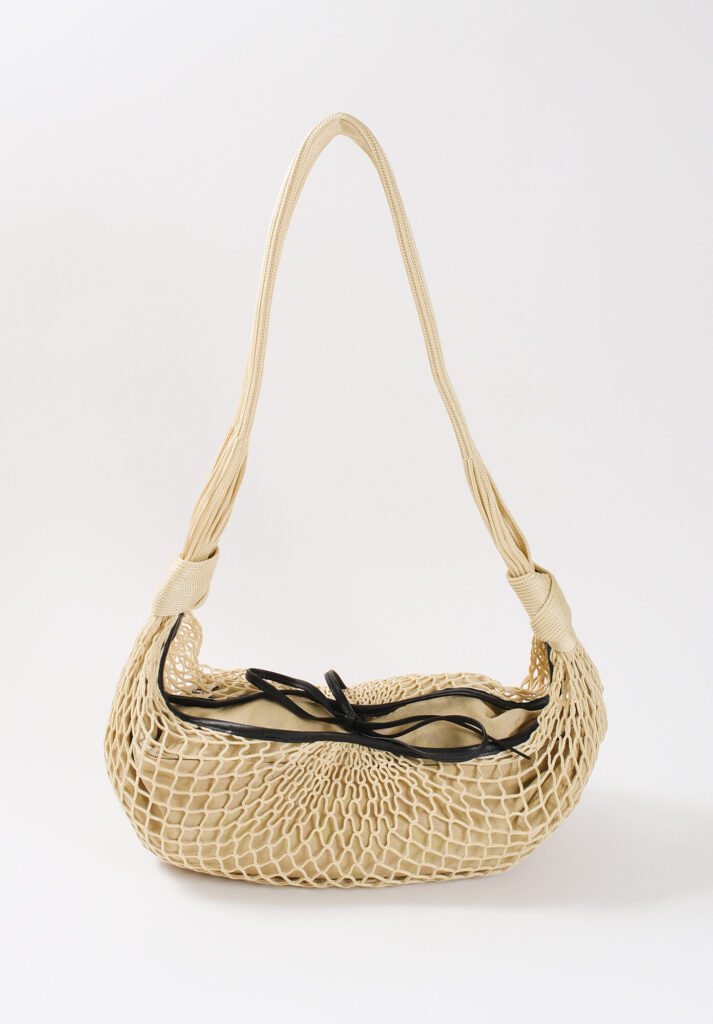
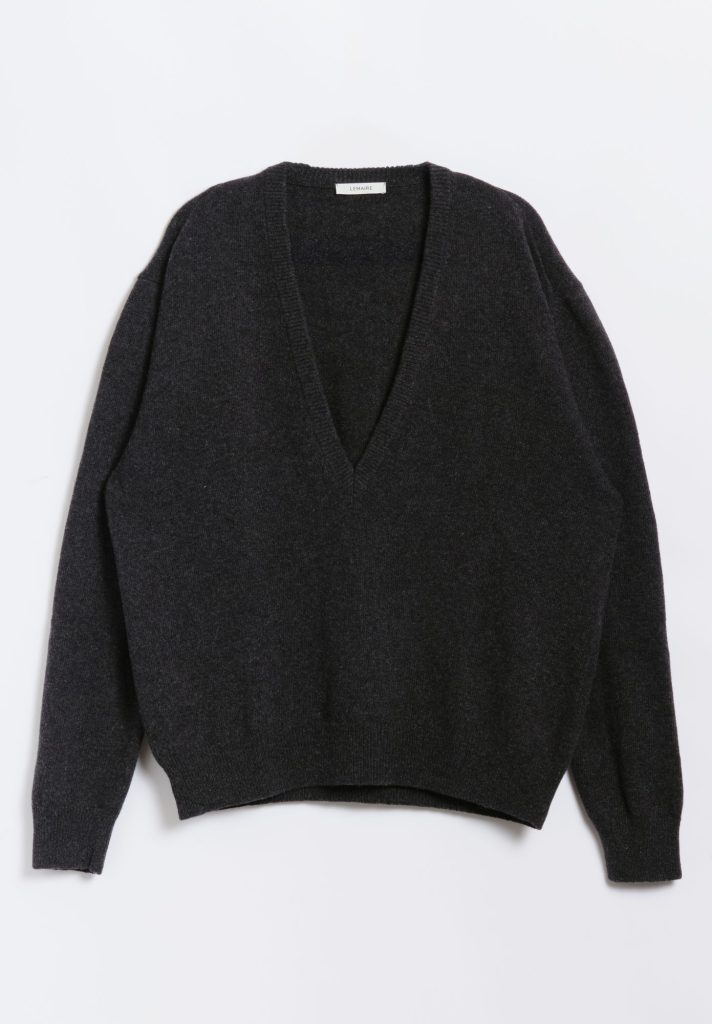
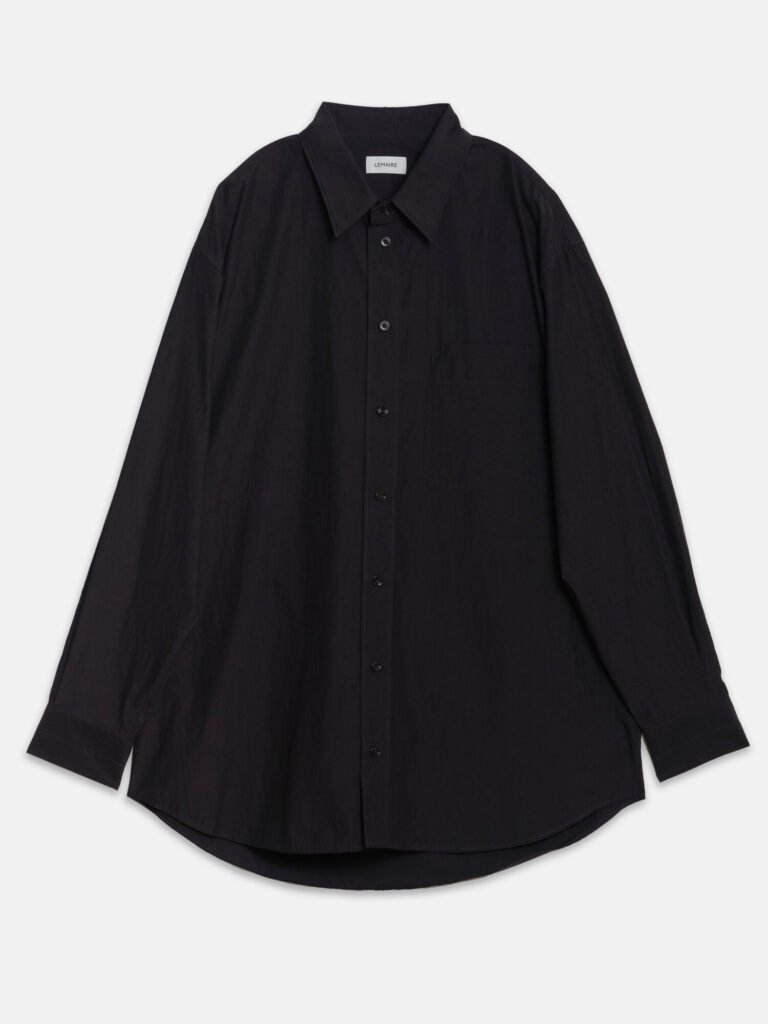
Then the clothes the outerwear is drawn over: double pocket shirts in a cotton crepe, an embroidered collar shirt, a Pyjama Shirt in silk, a relaxed shirt in viscose and virgin wool, a plastron top in plongé silk, a seamless top in viscose and silk, a long-sleeve tee in mercerized cotton, a rib tank in cotton jersey, and the knitwear: a deep V-neck jumper in lambswool, a wrap over cardigan in merino, a twisted cardigan in acrylic and wool. Trousers and skirts sit alongside them, and then the accessories, where the Croissant bag and the Balloon pouch are the two shapes people come looking for, and a glove ankle boot in eel is the one nobody expects.
One honest note, because it saves a return. There is no Lemaire size chart on this site, and there are no garment measurements to give you, so the fit notes on each product page carry that weight instead: how a piece runs, where it is decided, and what it will take underneath it. If you are choosing between two sizes or between two pieces, talk to us rather than guessing. Composition and origin are stated on each product page, and our fabric care guide covers wool, silk, cotton, and the multi-material case a lined jacket falls into.