Alexander Julian was born in Chapel Hill, North Carolina, in 1948, and grew up inside the clothing trade. His father, Maurice Julian, opened Julian’s in 1942, a store that had started life as a cycling shop. Alex worked in it while he was reading English at the University of North Carolina, and at nineteen, in the summer of 1969, he opened one of his own and called it Alexander’s Ambition.
He moved to New York in 1975 with a deadline he had set himself: a Coty Award before he turned thirty. He won the first in 1977, four more after it, and became the youngest designer taken into the Coty Hall of Fame. Two Cutty Sark Menswear Awards and a Career Achievement Award followed before he was forty.
What separated the work was that he designed the cloth as well as the clothes, the first American designer to do it, and examples of his textile design now sit in the Smithsonian’s permanent collection. Colours by Alexander Julian, the collection he began in 1981, was built on that advantage: space-dyed yarns, color put together in combinations menswear had not seen, and details that only pay out on second look. Multicolored buttonholes. Trompe l’oeil tweeds. His own account of them is that they “playfully subvert the expectations of both viewer and wearer.”
The reference behind all of it is not other clothing. “Claude Monet understood the complexity of color in nature over a hundred years ago,” as he puts it; “nature and great art have always been my inspiration.” Nor has the work stayed inside a wardrobe. The Charlotte Hornets’ purple and teal are his, from 1988, and so are the argyles running down the side of a University of North Carolina basketball uniform. The rest of his account of himself is four adjectives, and he has not revised them: forever classic, always comfortable, distinctly American, casually elegant.
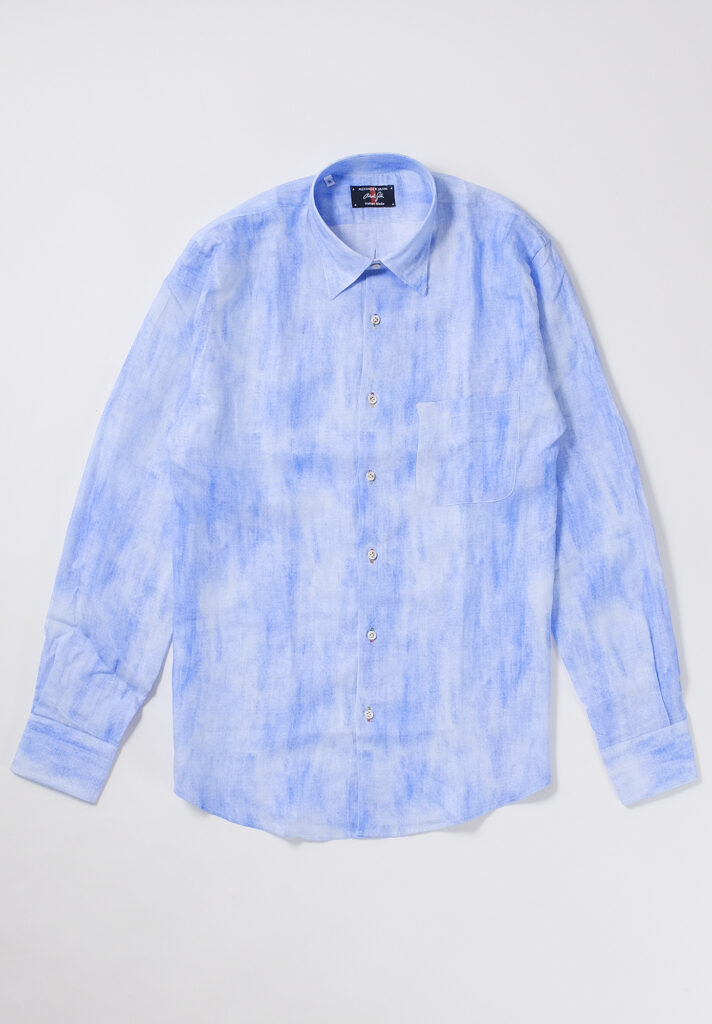
The Alexander Julian shirts at W Department are lightweight, regular fit, and collared, cut in cotton from cloth he designed himself, and made in North Carolina. They come in Purple, Dark Blue, Light Blue, and a Blue/Purple Plaid.
A collared shirt is a modest place to put a designer’s whole argument, which is part of why it works. The cut stays out of the way and the cloth does the talking, which is the right order of operations for a designer who spent his career making the cloth first.
Cotton shirting in cloth of his own design, made in his own state.