Santoni was founded in 1975 in Corridonia, a town in the Marche, which is the region where most of Italy learned to make shoes. The house gives the credit plainly in its own account: the story began “thanks to the intuition of Andrea Santoni”, who had gone into a shoe factory as a boy and worked his way through cutting, stitching, and production before starting his own bench. His son Giuseppe puts his own beginning at the same address and the same time: “You could say that I began working with my father when I was seven years old.” Giuseppe now leads the house. It is still owned by the family that started it.
The house describes what it does in terms of hands rather than machines, and the phrasing is worth reading closely because it is unusually specific for a company talking about itself. “In Santoni, the hand is everything: it shapes, moulds, colors and finally gives an unrepeatable identity to every object.” The color is the part people notice last and remember longest. Santoni finishes leather by hand, and its own care instructions tell you so sideways, by warning you to use creams made for its hand-applied colors and nothing else. When IWC wanted leather straps for its watches, it went to Santoni and the straps were hand-painted. That is the same skill, moved off the shoe and onto a smaller surface.
Giuseppe Santoni’s account of the house’s temperament is that it does not work by comparison. “What makes us creatively so different is partly the fact that I never compare us to other brands’ shoes.” What it does instead is hold two things at once, tradition and innovation, which he calls “two parallel pillars.” In practice that means a company that will restore a pair you have already worn for years rather than sell you a replacement, that will build a shoe to a single foot over four or five months, and that runs an academy inside itself for the express purpose of moving what its senior artisans know into younger hands. Its own line for that program is a good one: “To create is to preserve. To teach is to transcend.”
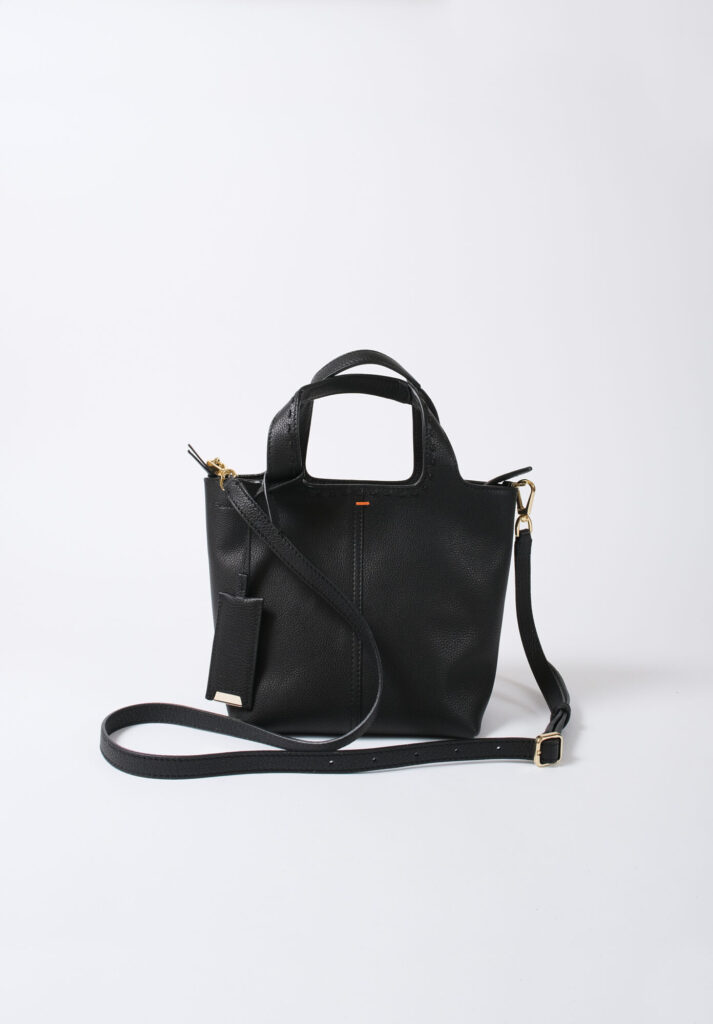
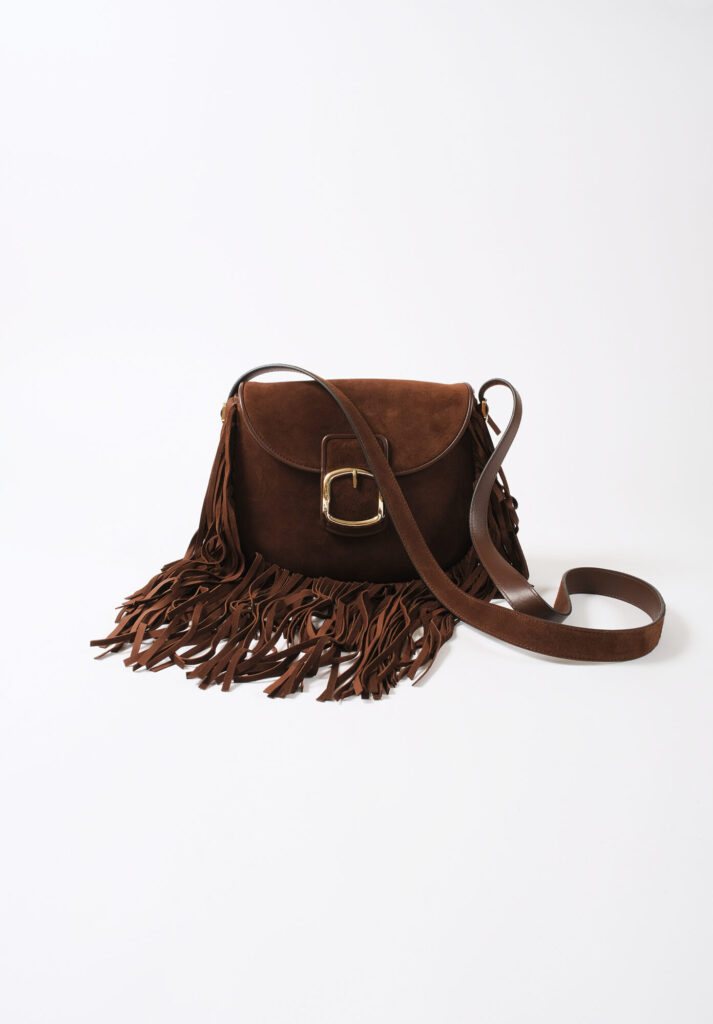
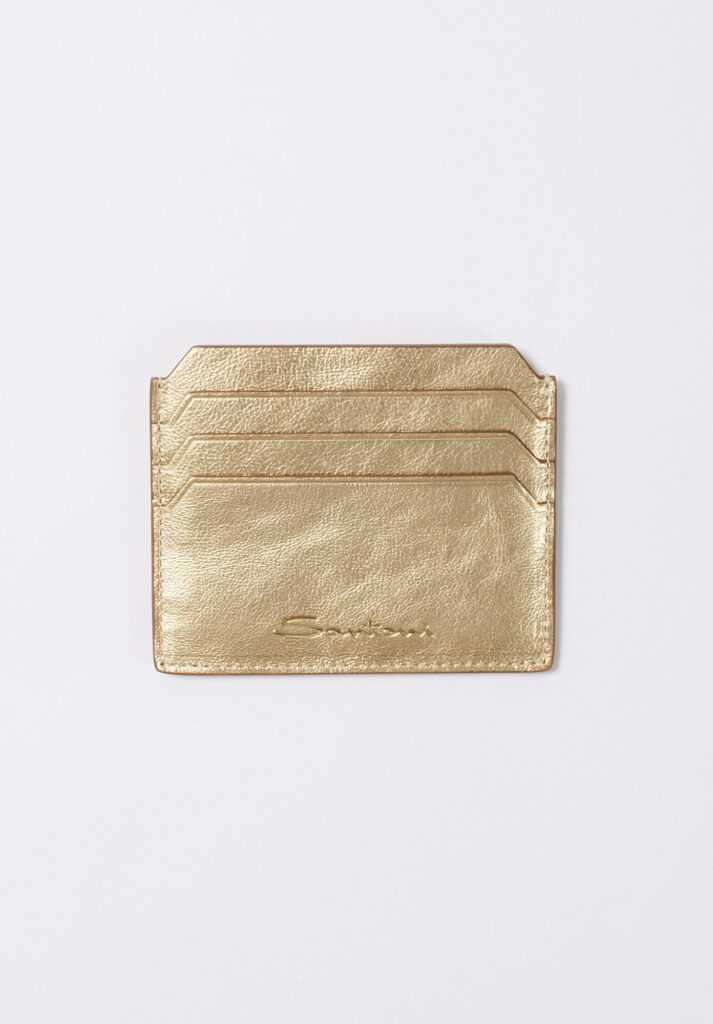
What we carry is not the shoe. It is the leather, in the small objects a house like this makes once it has spent half a century learning what leather does: cases, holders, and bags in tumbled leather, which takes a soft irregular grain and then takes color into that grain unevenly, on purpose. A tumbled hide is not trying to look new. It is the finish that rewards being carried every day rather than the one that punishes it.
We chose Santoni for the same reason we choose anything: the object is resolved. A card case is a small enough problem that there is nowhere to hide, and this house solves it the way it solves a shoe, by hand-finishing a good hide and then leaving it alone. Sizes and materials are on the individual pages below. If you want to know how a piece will wear, call us, or come and hold one.
Materials and, where the house gives them, dimensions are on each piece.