Yeung Chin works from Hong Kong. He came up through the Clothing Industry Training Authority there, enrolled at nineteen, added a night course in design, and took an MA at the University of Westminster in London in 2009. He had already designed for Li Ning by then, including sportswear worn by the Chinese national team at the 2008 Beijing Olympics, and afterward he was chief designer at the Hong Kong clothing retailer G2000. He left to build a label under his own name and runs it from a studio at PMQ. Very few people arrive at a practice like this one by way of mass-market production, and both halves are visible in the clothes, which are strange and also engineered.
The recent work comes out of study rather than reference. Chin has spent time with the Miao, an ethnic minority in southern China whose textile traditions include batik, embroidery, and folding, learning the techniques directly rather than quoting them from a distance. He teaches as a guest lecturer at the Hong Kong Design Institute, he has made costumes for the City Contemporary Dance Company, the Hong Kong Heritage Museum, and Asia Society Hong Kong, and the label has shown in Tokyo, New York, Milan, Paris, and at home.
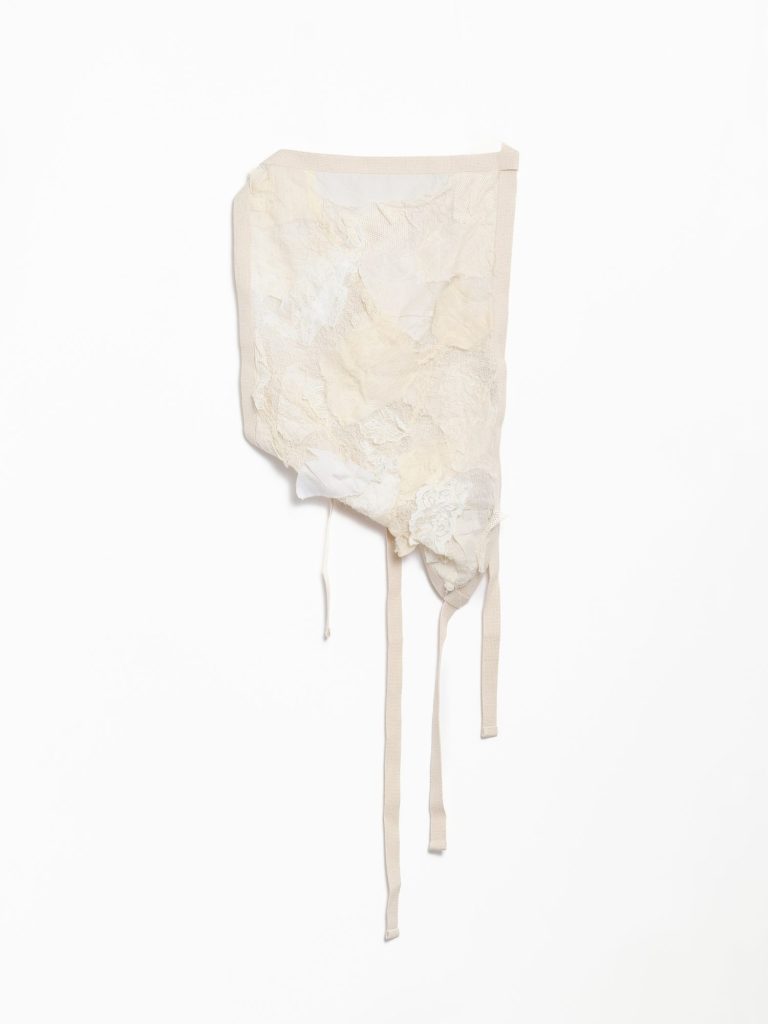
His own account of it is direct. “If it is appropriately executed, it can be a form of performance art,” he writes of the act of wearing. “My design is all derived from the belief that fashion is a means to showcase artistic ideas.” A recent exhibition statement from the house puts the same thought another way, describing the work as transforming embroidery and silver into wearable art. On a garment it shows up as surface: something laid on, folded in, or left deliberately unfinished.
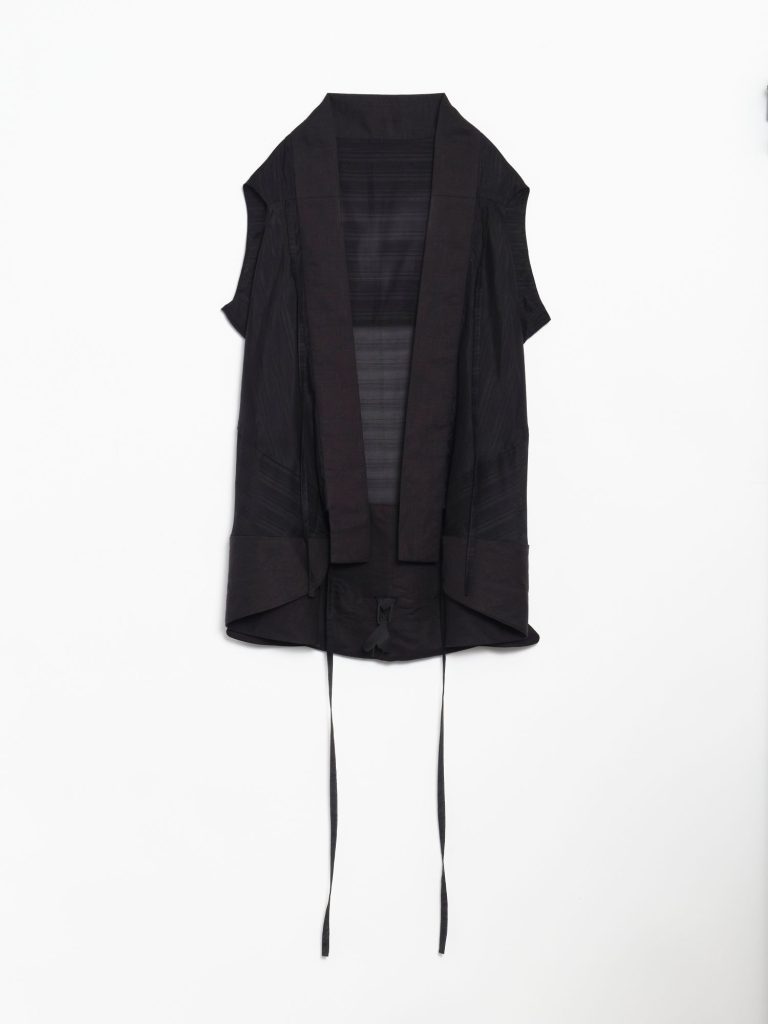
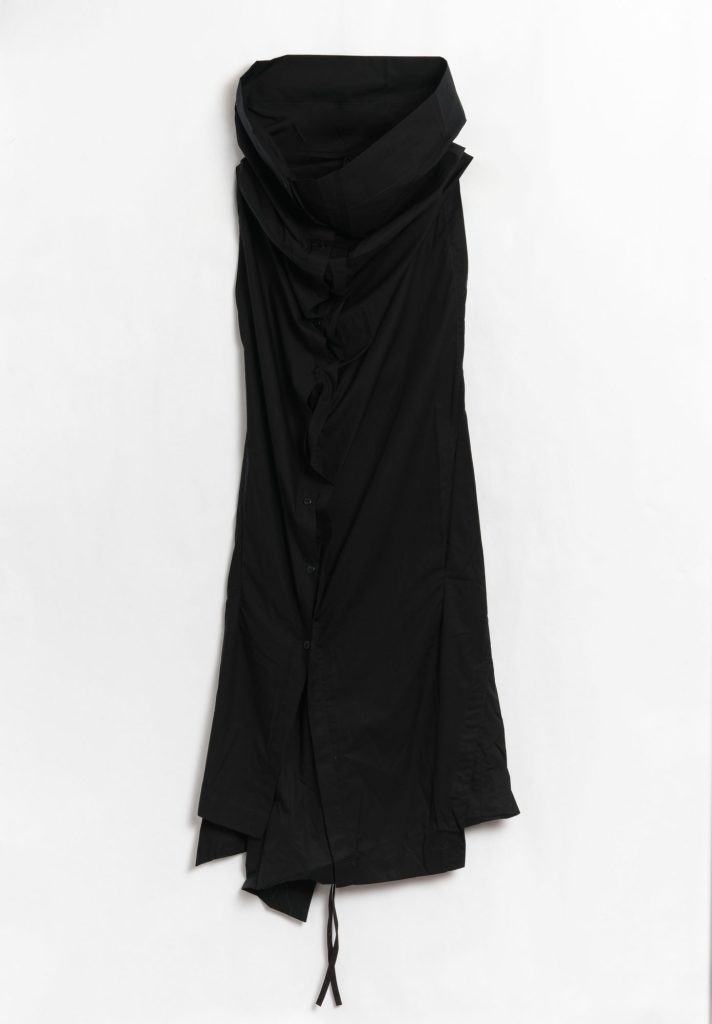
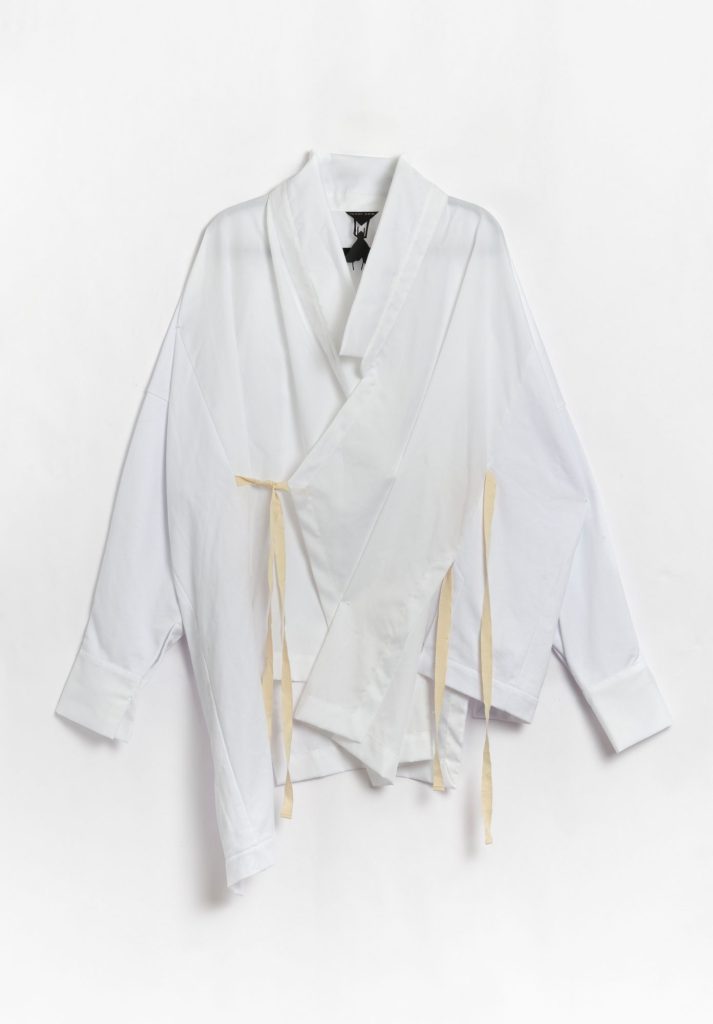
Most of what we hold from the house is cotton, and the cotton is asked to do several different things. One trouser is woven loosely enough that the structure of the cloth is the thing you are looking at, cut straight through the leg, in black and cream, with the hem left raw. Another has lace overlaid along its whole length, in black or in white. The oversize shirt is white and closes with ties rather than buttons, so the same garment can be worn as more than one shape. The cowl-neck dress is handmade, asymmetric, and built in layers, which in cotton is real work, because cotton has none of the natural fall of a silk and every fold in it has to be constructed rather than encouraged. There is a tiered skirt in black organdy, a sheer that is stiff rather than fluid, so each tier stands away from the one above it instead of falling onto it.
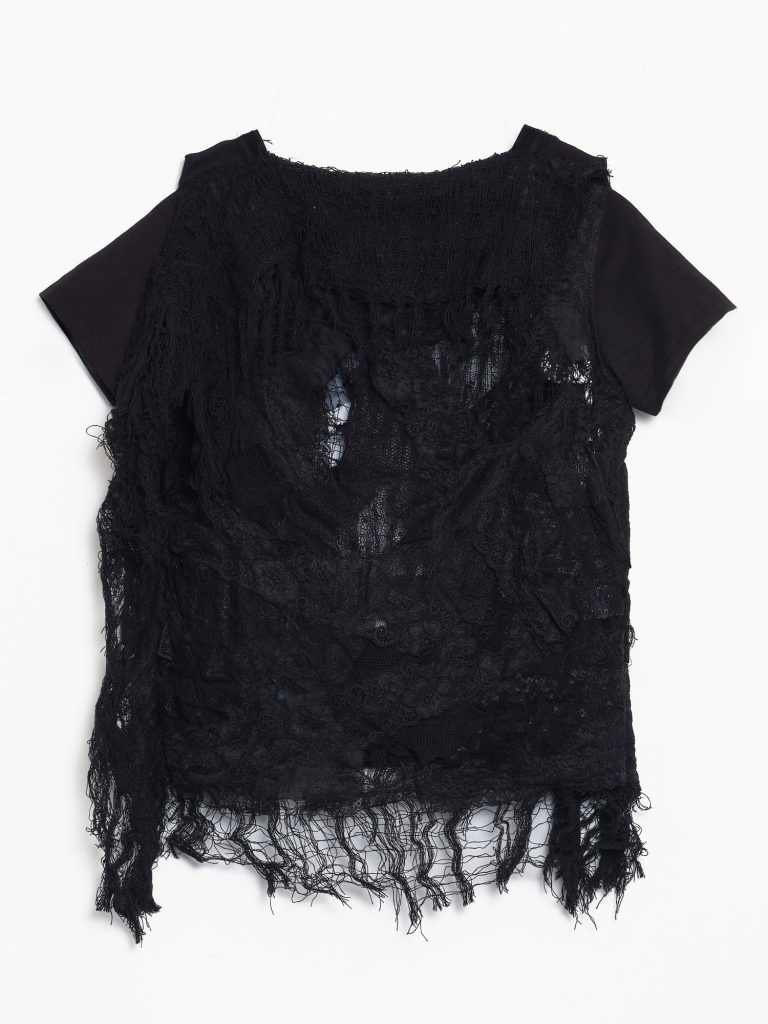
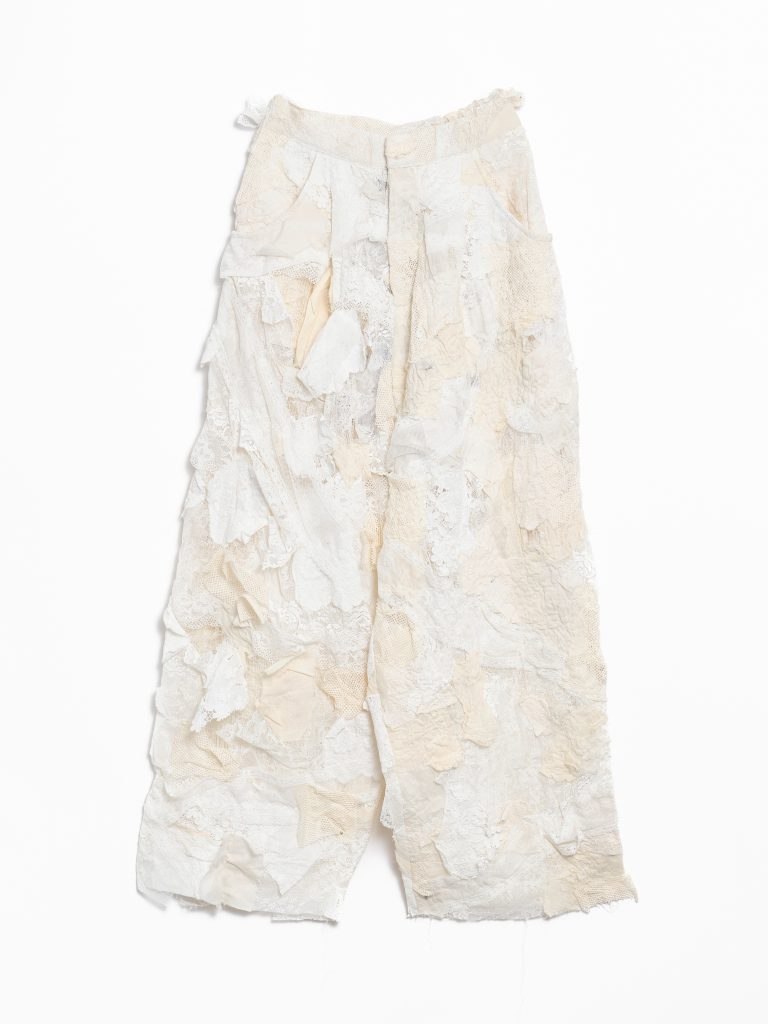
Several pieces carry the word embroidered in their names, and on the long pants, the asymmetrical dress, the draped cream top, and the black short-sleeve tee, what sits on the cloth is lace. The distinction is worth having. Embroidery is stitching worked into a ground cloth: the ground stays continuous and the pattern is added to it. Lace is openwork in its own right, made by twisting and looping thread around holes, and an overlay is a second cloth laid over a first. One is a decorated cloth. The other is two cloths, held apart by nothing except their own thickness, which is why the pattern shifts as the wearer moves and the gap between the layers opens and closes.
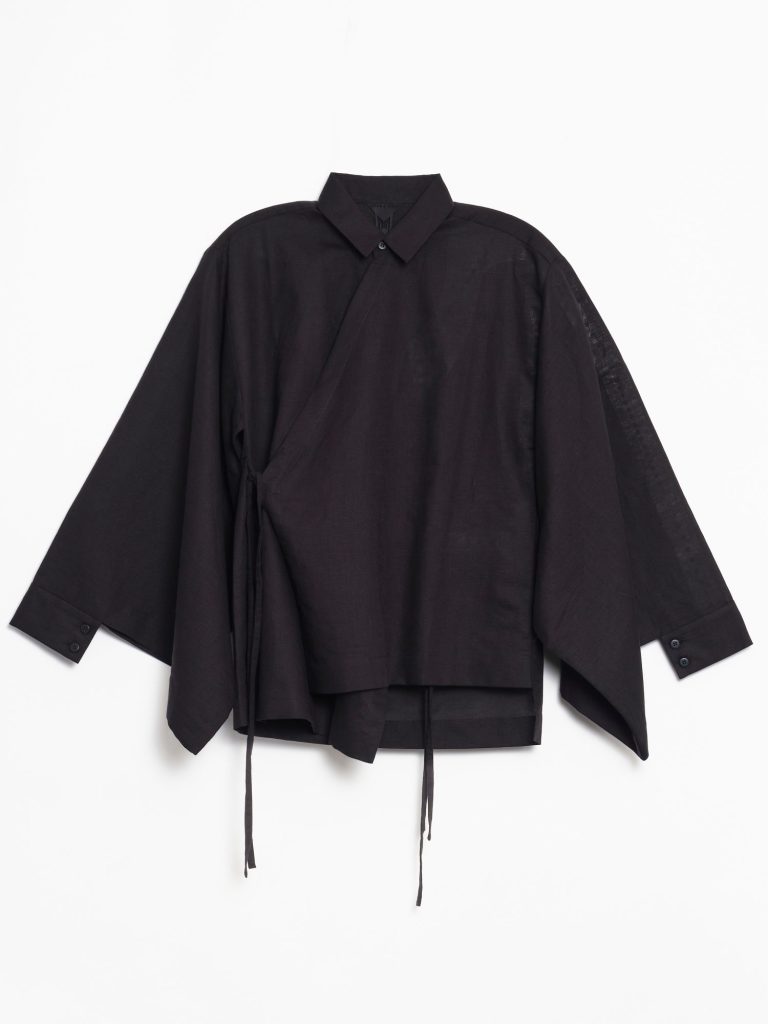
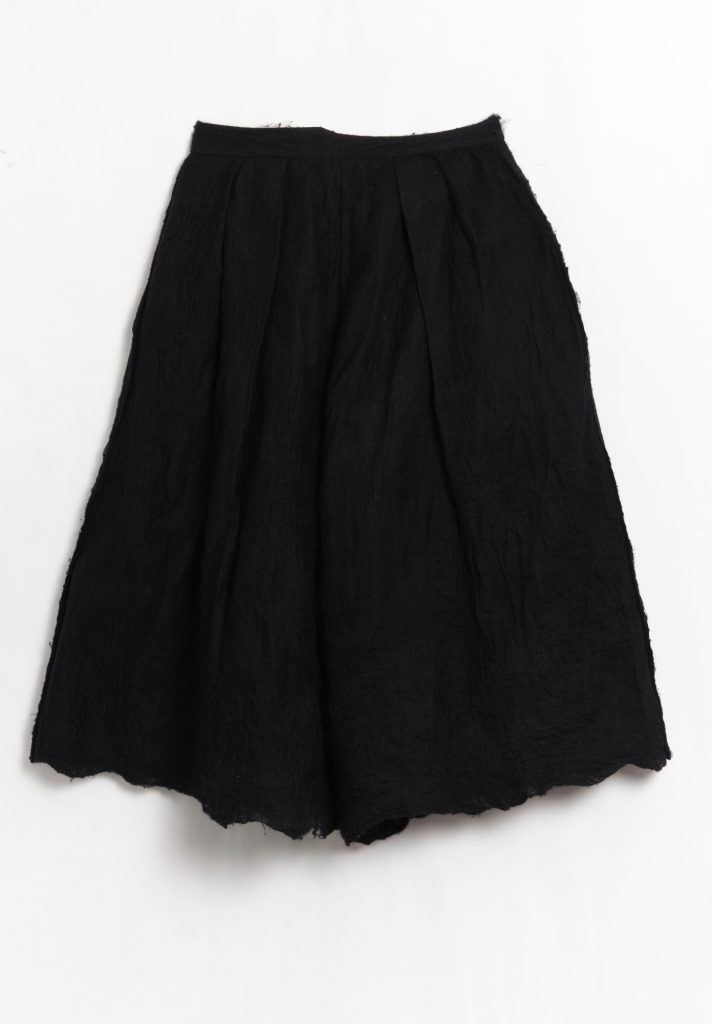
Not all of it is cotton. The felted wool trousers are the house at its densest. Felting is wool deliberately shrunk until the fibers lock and the cloth stops behaving like a woven thing at all, and these are cut wide through the leg and cropped at the ankle, which is the right answer to a cloth with that much body in it. The linen shirt is black, layered, and asymmetrical, closing with ties and cut with sleeves far larger than the arm inside them. Wool and linen each want handling of their own, and the fabric care guide covers it.
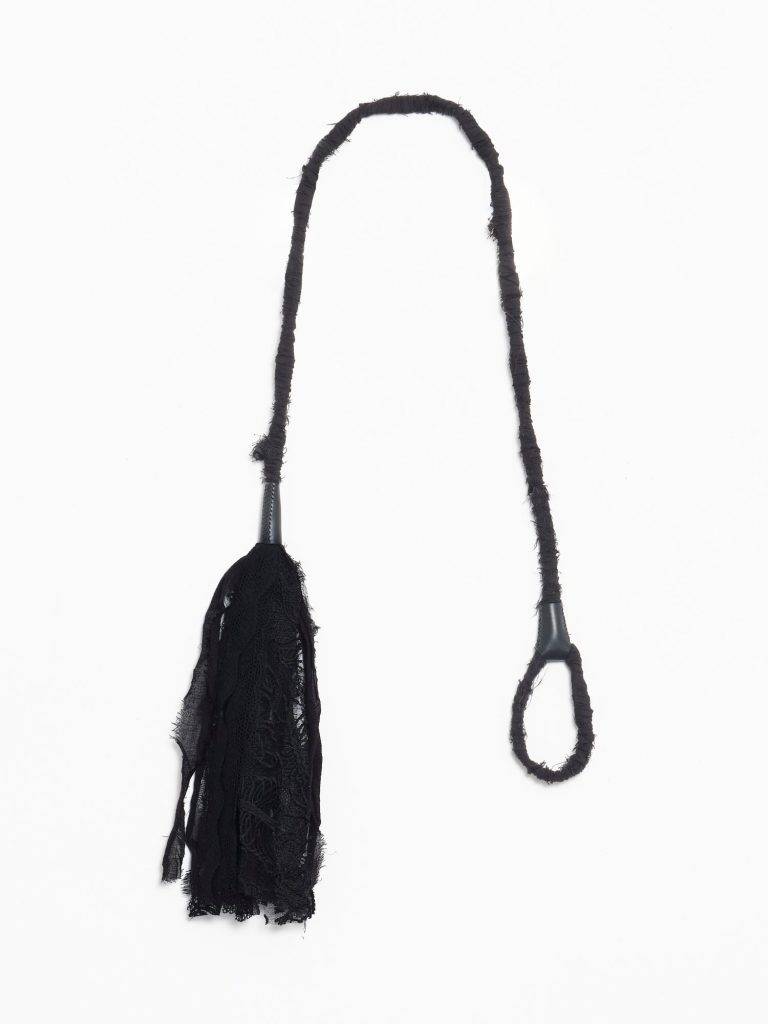
If you want one thing to look at first, look at the edges. A raw hem on the loosely woven trouser, a raw edge that is the only detail on an otherwise plain blue one, a frayed hem on the black dress, tassels on the cotton wrap belt where the warp is allowed to run out rather than be bound. A hem is usually where a maker declares a garment finished. This house keeps declining to make the declaration, and that is why the clothes stay live at the edge.
Sizing runs small, medium, and large, with an extra small in the range and a belt sold in one size. There is no numbered conversion for any of it, so call us if you are choosing between two and we will measure the piece with you.
Everything we hold from the house, piece by piece.