$932.50
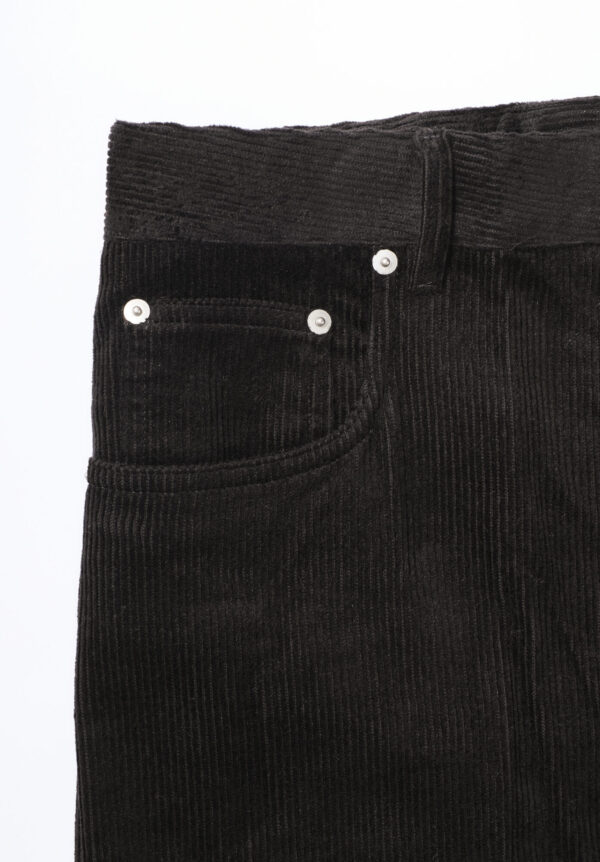
Corduroy is a cut-pile weave. Extra weft yarns are floated across the surface during weaving and then sliced, and the cut floats stand up as the ridges the trade calls wales. That construction is what makes corduroy warm at a moderate weight, and it is why it wears the way it does: the tops of the wales abrade first, so a corduroy trouser fades along the ridges at the knee and the seat and records exactly where its owner sits and bends. It is the only cloth other than raw denim that keeps that sort of diary.
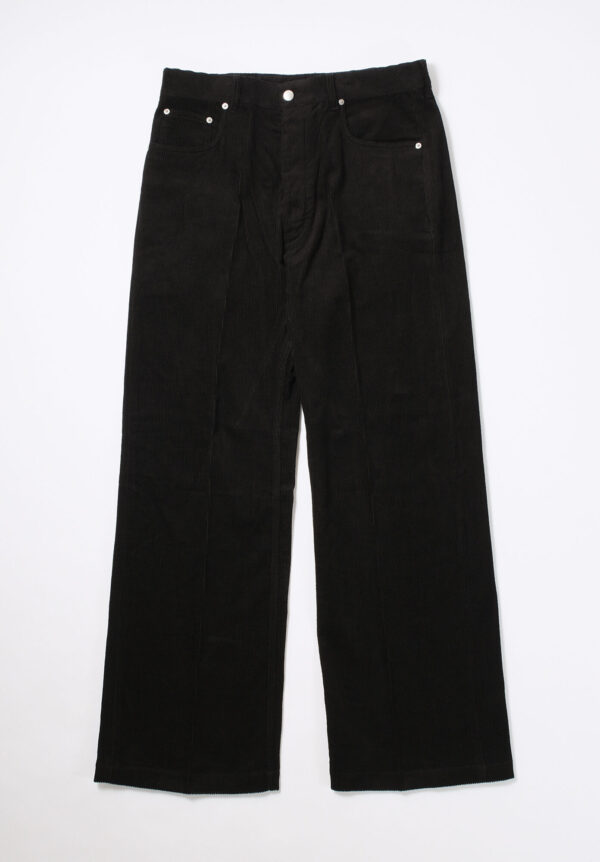
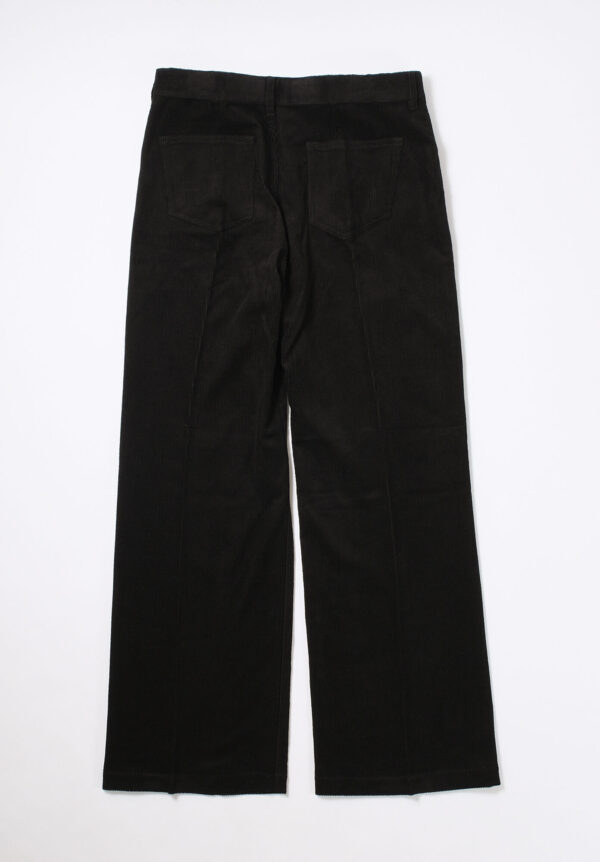
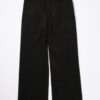
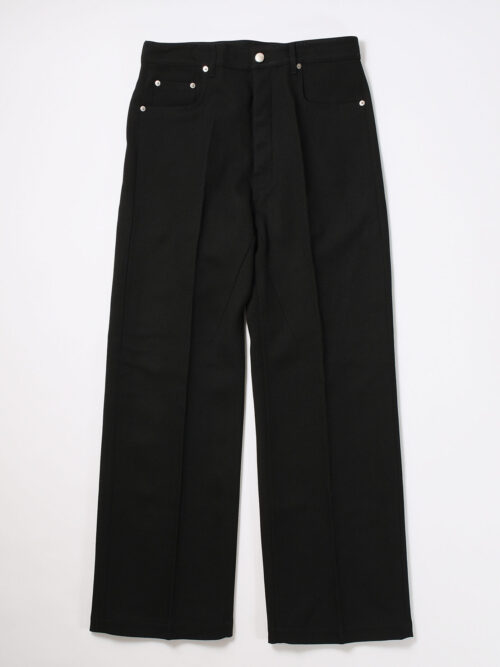
Put it on the Geth pattern, which is wide, low, and straight, and the ridges run the length of a very long leg. Vertical wales lengthen. On a wide low-rise trouser that is the whole visual argument, and it is why a corduroy Geth reads taller than a denim one of the identical cut.
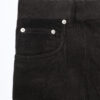
This is not a plain cotton corduroy, and the difference shows before anyone explains it. Thirty percent of the cloth is silk, which in a pile fabric goes exactly where it counts. Silk takes dye deeper than cotton and returns light along the length of the filament rather than scattering it, so the crown of each wale carries a low sheen while the channel between them stays matte, and the trouser reads as a series of lines rather than as a single dark field. It also makes the cloth softer in the hand and more fluid through the leg than a cotton corduroy of the same weight, so a wide leg in it falls instead of standing away. The trade is durability. Silk abrades faster than cotton, so the wales will burnish where the trouser is sat in and bent, which is the same diary corduroy has always kept and here it is written in shine rather than in fade.
Black is the difficult colour in corduroy and the one worth having. A pile absorbs light where a flat weave returns it, so black corduroy has depth rather than flatness, and with silk in the pile the wales read as lines of low light laid over it.